North Korea Top 10 Fairytale Places reveals a hidden world of misty mountain peaks, ancient temples, and crystalline crater lakes that remain largely untouched by the modern world.
Discovering North Korea Top 10 Fairytale Places, travelers encounter landscapes that seem pulled directly from folklore and legend. This northeastern peninsula nation, shrouded in mystery, harbors some of Asia’s most enchanting natural destinations.
From volcanic highlands to sacred valleys, the country’s fairytale character emerges through its preserved Buddhist monasteries, dramatic rock formations, and unspoiled forests that have survived centuries of change.
These ten remarkable places showcase the poetic soul of a land where ancient traditions meet raw natural beauty, offering visitors a glimpse into whimsical corners rarely explored by the outside world.

1. Mount Paektu & Heaven Lake
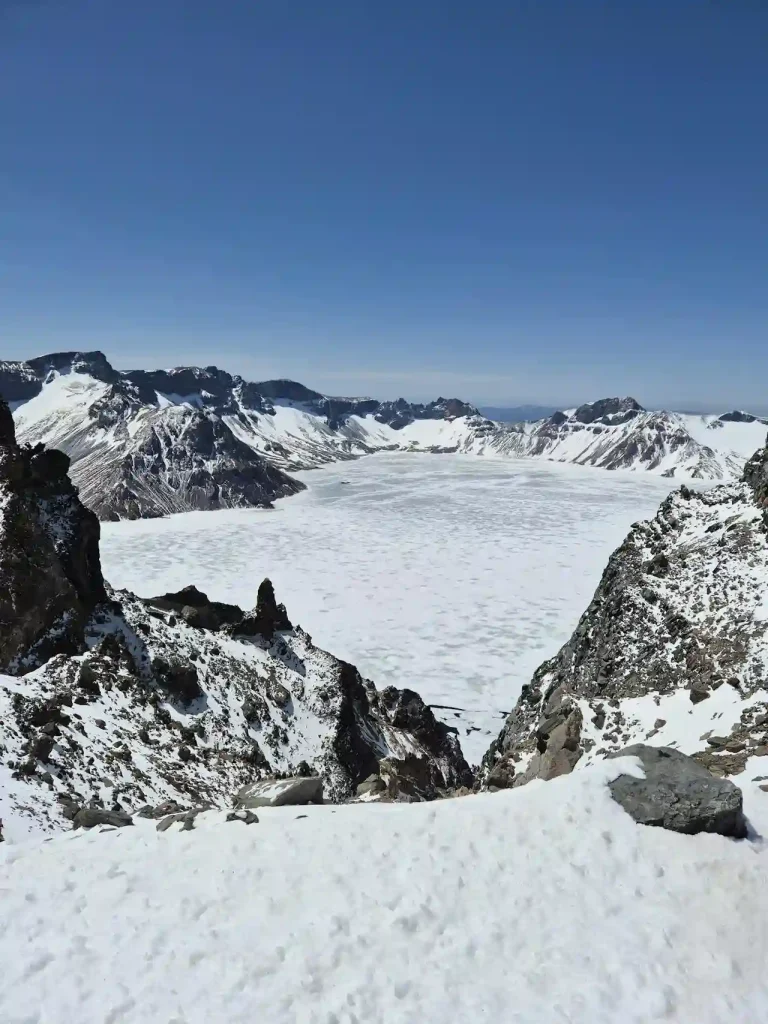
At 2,744 meters, Mount Paektu rises as Korea’s most sacred and tallest peak, crowned with a crater lake of breathtaking beauty.
Known locally as White Head Mountain, this volcanic summit sits on the border between North Korea and China.
The crown jewel is Heaven Lake, a profound crater lake that freezes solid until mid-June, remaining the deepest crater lake in the world. The journey to the summit unfolds through a landscape of primordial mist and ancient rock, with the lake appearing like a jewel set into the mountain’s heart.
Surrounding the caldera, rare high-altitude flora clings to volcanic slopes, creating an otherworldly atmosphere. The water’s crystalline surface, when thawed, reflects sky and cloud in mirror-like perfection.
This destination embodies centuries of Korean legend and spiritual significance, a place where earth and sky converge in magical union.
2. Kumgangsan’s Diamond Peaks
Kumgangsan, translating as Diamond Mountain, unfolds across forty kilometers of terrain on North Korea’s eastern coast, a landscape of granite and diorite towers that shimmer when caught by light.
The region divides into three distinct zones: Inner Kumgang shelters ancient Buddhist temples and hidden hermitages; Outer Kumgang features waterfalls cascading through narrow gorges and natural hot springs; and Sea Kumgang showcases dramatic rock pillars rising from turquoise lagoons.
Among its most celebrated features stands Kuryong Falls, plunging seventy-four meters into an emerald pool. The highest peaks exceed 1,600 meters, creating panoramic vistas of ridges fading into lavender mist.
Trails wind through this dreamlike landscape, passing forgotten stone pavilions and sacred groves where Buddhist monks once meditated for centuries. The mountain earned its poetic name from ancient poets who believed death after witnessing such beauty would bring no regrets.
3. Mount Myohyang’s mysterious fragrance
Mount Myohyang, or Mysterious Fragrant Mountain, breathes enchantment through its mixed broadleaf and coniferous forests spreading across 16,000 hectares of protected national park.
The name derives from the mystic shapes and fragrances that drift through the valleys, creating an atmosphere that locals and visitors describe as profoundly spiritual. Autumn transforms this realm into a tapestry of gold, crimson, and burgundy leaves that seem almost painterly in their intensity.
At the mountain’s heart stands Pohyonsa Temple, an eleventh-century Buddhist sanctuary reconstructed following wartime damage, its vermillion walls and thirteen-story pagoda creating a fairytale silhouette against forested peaks.
The fresh, unpolluted air carries the scent of ancient forest and stone, transporting visitors to a realm where modern concerns fade entirely. Hidden pavilions and meditation halls dot the landscape, each positioned to capture perfect views of valleys and distant ridges.
4. Mount Chilbo’s seven treasures
Mount Chilbo, the Mountain of Seven Hidden Treasures, rises in northeastern North Korea with an otherworldly beauty that defies easy description.
Legends speak of seven precious treasures buried within its slopes, and the landscape itself seems treasure enough for any wanderer. The mountain divides into three regions: Inner, Outer, and Sea, each revealing different facets of natural artistry. Rare rock formations jut from forested slopes at impossible angles, creating compositions that resemble sculptures by ancient master artists.
When snow blankets the peaks, the landscape transforms into crystalline fantasy. The Kaesim Buddhist Temple, founded in 826, stands as one of North Korea’s official national treasures, its ancient stones worn smooth by a thousand years of pilgrims’ footsteps.
Local guides share folklore and mountain legends, weaving stories of fairies and celestial beings into the hiking experience.
5. Ullim Waterfalls’ hidden cascade
Near the city of Wonsan, Ullim Waterfalls remained unknown to the outside world until soldiers discovered them in 2001 while conducting blasting operations, transforming what was hidden into a stunning destination.
The falls plunge with tremendous force, their mist creating rainbows in afternoon light. The surrounding basalt rocks, worn smooth by centuries of water flow, form natural pools perfect for reflection and contemplation. Picnic grounds nestled beside the falls allow visitors to experience the cascade’s thunderous presence while seated among wildflowers and shade-giving trees.
The falls’ relatively recent discovery adds to their fairytale quality – a secret finally revealed to those seeking magical places off conventional tourist routes.
6. Kaesong’s ancient kingdom
The historic city of Kaesong carries the weight of centuries, having served as capital during the Goryeo Kingdom when it was one of Asia’s most cultured and refined cities.
Narrow cobblestone lanes wind between traditional wooden houses with curved tile roofs, their dark wood weathered to silver-gray by generations of wind and rain. Buddhist temples hide in quiet corners, their stone walls covered in soft moss.
The landscape surrounding Kaesong features rolling hills dotted with historical sites marking the anti-Japanese revolutionary struggle.
Pine forests embrace the valley, and morning mist clings to the ridgelines, creating an atmosphere suspended between past and present.
7. Wonsan’s coastal gems
On North Korea’s eastern coast, Wonsan reveals a different kind of fairytale beauty – that of seaside mystery and maritime charm.
Sandy beaches stretch for kilometers, rarely crowded, with the Sea of Japan creating a moody backdrop. Local markets bustle with energy, selling fresh seafood and regional produce. The waterfront atmosphere carries an unhurried quality, as vendors prepare meals over coal braziers and locals gather to watch ships pass.
Coastal cliffs form dramatic viewpoints where the land meets the endless horizon, and small fishing villages maintain centuries-old traditions.
The laid-back energy stands in stark contrast to Pyongyang’s formality, creating a relaxing respite for travelers seeking quieter encounters.
8. Mount Masikryong’s summit views
Mount Masikryong, whose name means horse-resting pass, rises about twenty kilometers from Wonsan with spectacular vistas from its Taehwa Peak.
The summit, reached by ski lift, reveals panoramic views extending across the surrounding landscape toward the coast. Sunset at the peak bathes the terrain in golden and crimson light, creating an almost ethereal atmosphere.
Even outside winter when the ski slopes lie empty, the peak offers magnificent scenery and the thrill of elevation above the world.
The Masikryong Ski Resort, completed in only ten months, blends modern architecture with natural beauty, and the surrounding forests add to the mountain’s enchanting character.
9. Samjiyon County’s northern magic
Nestled near the Chinese border in extreme northeastern North Korea, Samjiyon County serves as gateway to Mount Paektu and embodies the raw, untamed beauty of the peninsula’s most remote reaches.
The small airport allows visitors to fly directly to this high-altitude county, arriving in a realm of extreme cold and pristine wilderness. Morning walks through Samjiyon reveal spectacular scenery at every turn, with locals painting landscapes and children playing among traditional stone houses.
The Rimyongsu Falls nearby cascade from underground springs breaking through basalt rocks, creating multiple water courses averaging six meters in height.
In winter, these falls transform into spectacular ice sculptures. The county’s isolation preserves an authenticity and quietness increasingly rare in the modern world.
10. Sinpyeong Lake’s rest house sanctuary
Sinpyeong Lake provides a serene waypoint along the long roads crossing North Korea’s interior, a place where travelers pause to encounter unexpected beauty.
The rest house situated beside the lake offers simple hospitality and a window onto the landscape’s tranquility. Mountains rise beyond the water, their reflections creating perfect mirror images on clear days.
The quiet morning hours bring an almost meditative quality to the location, with few visitors and abundant space for contemplation.
Local specialties like regional snake wine provide cultural connection, while the natural setting soothes weary travelers.