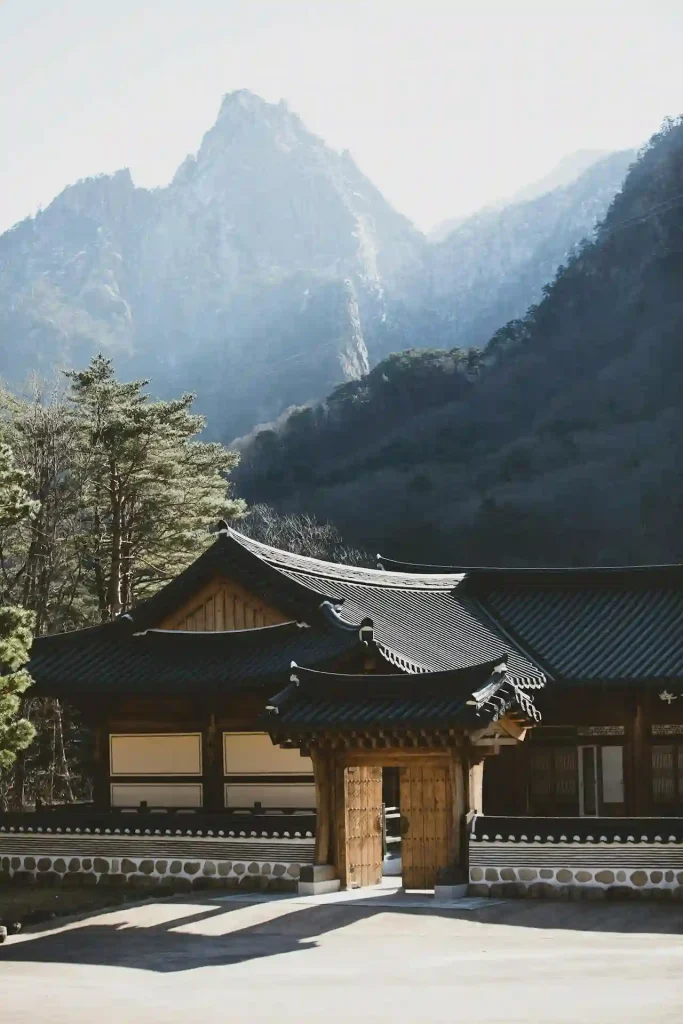
South Korea Top 10 Fairytale Places introduces a world of hidden landscapes where ancient traditions blend seamlessly with whimsical charm. Our selection of South Korea Top 10 Fairytale Places helps travelers discover the most magical corners of this enchanting country, far beyond the crowded tourist circuits of Seoul and Busan.
South Korea is rich in quiet corners and little-known escapes that feel lifted from a storybook, where cloud-wreathed peaks frame timeworn temples, painted villages spill down hillsides in a patchwork of color, and untouched valleys and coastlines reveal nature at its most serene.

1. Songwol-dong Fairy Tale Village, Incheon
Tucked away in the working-class district of Incheon lies one of Korea’s most whimsical urban transformations.
Songwol-dong Fairy Tale Village emerged as a government-led revitalization project that has since blossomed into a storybook realm rendered in vibrant paint and imagination. Every surface – from towering walls to narrow staircases – bursts with colorful murals depicting Disney princesses, characters from classic tales, and scenes from beloved stories.
The village’s winding alleys feel like stepping into an illustrated children’s book, where each turn reveals another magical tableau. Small cafes tucked into corners serve as rest stops in this rainbow landscape, and the free admission makes it an accessible escape from Incheon’s urban pace.
During twilight hours, the painted walls glow with an ethereal quality as the evening light softens the saturated hues, creating an almost dreamlike atmosphere that justifies the village’s fairytale designation.
2. Gamcheon Culture Village, Busan
Perched dramatically on a steep hillside overlooking Busan’s cityscape, Gamcheon Culture Village is often called the Santorini or Machu Picchu of Korea – comparisons that capture only part of its extraordinary character.
This neighborhood transformed from a struggling post-war settlement into a open-air gallery where every facade tells a story through street art and cultural installations. The village’s distinctive layered architecture means homes are stacked vertically, creating a maze of narrow staircases and hidden passages that reward exploration.
Murals depicting characters from literature and art cover endless walls, while sculptures emerge unexpectedly in quiet corners. The community remains genuinely lived-in, with elderly residents navigating the steep streets and traditional markets still serving the local population, lending authentic texture to this creative sanctuary.
Visitors drawn to hidden gems appreciate how Gamcheon preserves both its artistic vision and residential soul, avoiding the sterility of purely touristic attractions.
3. Namhae Island, Gyeongsangnam-do
This fifth-largest island in Korea remains refreshingly undervisited despite possessing some of the country’s most compelling coastal landscapes.
Namhae Island’s essence emerges through unhurried exploration – golden beaches tucked into sheltered bays, terraced rice paddies cascading toward the horizon, and traditional fishing villages where 500-year-old methods still persist.
The island’s most distinctive feature is its jukbangnyeom – traditional bamboo fishing nets constructed with wooden posts that transform the coastline into an organic sculpture. Ancient Boriam Temple clings to a clifftop on Geumsan Mountain, offering both spiritual significance and panoramic ocean vistas that shift in color throughout the day.
The Daeguk Mountain Fortress, largely unknown even to Korean visitors, sits deep within forested terrain overlooking the sea, its ancient stone remains whispering stories of the Three Kingdoms era. Namhae invites travelers seeking underrated destinations where nature dominates and solitude comes naturally.
4. Jeonju Hanok village
Home to over 800 beautifully preserved traditional hanok houses, Jeonju’s historic village represents Korea’s largest concentration of wooden architectural heritage from the Joseon Dynasty.
Walking these serene streets feels like traversing centuries – wooden latticed windows, curved tiled roofs, and earthen walls create an atmosphere of profound tranquility that contrasts sharply with modern Korea.
The village’s spiritual center, Gyeonggijeon Shrine, stands surrounded by intimate gardens and bamboo groves dating to the 15th century. Beyond the main attractions, Jeonju’s backstreets harbor quiet cafes, artisan workshops, and restaurants serving bibimbap – the region’s famous rice dish that originated here.
The village earned designation as an International Slow City in recognition of its harmonious blend of tradition and contemplative pace.
Evening visits reveal a different magic – lantern light softening the wooden facades while the smell of traditional cooking drifts through alleyways, creating sensory experiences that photograph beautifully yet feel even more profound in person.
5. Bulguksa Temple and Seokguram Grotto, Gyeongju
These twin UNESCO World Heritage treasures represent the pinnacle of Silla-era Buddhist artistry and deserve ranking among the world’s sacred sites.
Bulguksa Temple, constructed between 751 and 774 CE, showcases architectural brilliance through its stone pagodas – particularly the intricate Dabotap and Seokgatap – and wooden structures that harmonize perfectly with the forested slopes of Tohamsan Mountain.
The famous Cheongun-gyo bridge displays engineering sophistication achieved a millennium ago. Just above the temple, Seokguram Grotto presents an entirely different experience – an artificial stone cave containing a monumental Buddha surrounded by intricately carved bodhisattvas and celestial beings.
The grotto was painstakingly constructed using hundreds of granite stones fitted without mortar, with the main chamber’s 6.8-meter dome representing an engineering marvel. The spiritual energy permeating both sites transcends their historical significance, offering contemplative travelers profound connection to Korea’s Buddhist heritage.
6. Seoraksan National Park
This dramatic mountain sanctuary contains some of Korea’s most awe-inspiring natural landscapes, yet extensive valleys and lesser-known trails remain wonderfully uncrowded.
Seoraksan’s towering granite peaks rise from dense forests of remarkable biodiversity, creating a landscape of startling beauty especially during autumn when leaves transform the slopes into a tapestry of crimson and gold.
The Sibiseonnyetang Basin – literally the Valley of the Twelve Fairies’ Bath – features eight cascading waterfalls creating pristine pools where Korean legend claims celestial beings once bathed.
The Biryong Falls trail offers moderate hiking with dramatic visual rewards, where a suspension bridge crosses a deep gorge above turquoise water. Hidden valleys penetrate deeper into the park, revealing lesser-visited temples like Sinheungsa tucked into the mountainside with their own spiritual magnetism.
Seoraksan represents the soul of Korea’s wilderness – a place where mountain mist rises through ancient forests and waterfalls sing primal songs untouched by modern intrusion.
7. Jeju Island’s hidden volcanic wonders
Beyond Jeju’s famous attractions lies a constellation of lesser-known treasures showcasing the island’s unique geological character.
San-Gumburi Crater offers a serene alternative to crowded Hallasan – a lush volcanic crater surrounded by specialized plant life found nowhere else on earth, with peaceful walking trails circling the depression. The Manjanggul Lava Tube represents one of the world’s largest underground caverns, where walking through darkness reveals the raw geological forces that shaped the island. Teugyeo Cave and Cheonjeyeon Falls provide intimate waterfalls without the crowds of mainstream destinations.
The columnar joints formations at various coastal points display dramatic hexagonal basalt columns formed through millions of years of volcanic activity – geological sculptures more impressive than famous international examples yet largely unknown internationally. Jeju’s interior reveals countless oreum (small volcanic hills) suitable for brief hikes offering panoramic perspectives.
The island’s distinct geography, separate from mainland Korea, creates an almost tropical atmosphere where traditional Haenyeo culture (female free-diving heritage) persists across generations.
8. Boseong green tea plantations
This pastoral landscape in South Jeolla Province produces nearly half of Korea’s green tea through farming methods refined over 1,500 years. The Daehan Dawon Tea Plantation stretches across undulating hillsides where rows of emerald tea bushes create optical illusions of green waves frozen mid-motion.
Walking through the terraced plantations at dawn, when mist clings to the vegetation, produces an almost supernatural atmosphere – the air carries the grassy essence of growing plants while golden light filters through morning haze. The plantation’s organic farming practices preserve the landscape in its purest state, free from industrial chemicals.
Visitors can experience tea harvesting and tasting, understanding how this ancient beverage shaped Korean culture across centuries. The area surrounding the plantation harbors traditional villages, local markets brimming with character, and numerous tea houses where you can sip freshly brewed green tea while gazing across the fields.
Boseong represents agricultural beauty at its finest – a working landscape where tradition, sustainability, and visual poetry converge naturally.
9. Andong Hahoe Folk Village
Founded in the 14th-15th century by the Pungsan Ryu clan, Hahoe Folk Village preserves not just architecture but an entire cultural ecosystem spanning over 600 years.
The village’s layout follows pungsu (Korean geomancy) principles, organizing buildings to create harmony between human settlement and natural landscape – the result resembles an organic flower blooming along the Nakdong River’s bend.
Traditional tile-roofed aristocratic houses stand in fascinating proximity to thatched-roof commoner dwellings, displaying the social stratification of the Joseon Dynasty in physical form.
The Hahoe Mask Dance, a ritual performance originating here and dating back six centuries, continues to be performed seasonally – a living tradition rather than museum artifact. Ancient wells, a 600-year-old tree, and weathered pathways connecting compounds create an atmosphere of genuine inhabitation rather than preserved emptiness.
The village’s designation as a UNESCO World Heritage Site recognizes its authenticity – current residents from the same family clan maintain daily life within the traditional structures, ensuring the village pulses with actual community rather than simulated history.
10. Suncheon Bay Wetland
This UNESCO World Biosphere Reserve stretches across 30 square kilometers of golden reed fields, salt marshes, and mudflats that create one of Asia’s most significant ecological treasures.
Suncheon Bay functions as a critical habitat for over 140 migratory bird species, making it a paradise for nature photographers and ornithology enthusiasts. The extensive reed colonies create an otherworldly landscape where golden plant matter meets silvery water, shifting hues throughout the day as light angles change.
Walking the wooden boardwalks through the wetland provides intimate encounters with the ecosystem – you might observe birds hunting in shallow waters, witness the intricate life of tidal flats, or simply experience the profound peace of nature operating at its own unhurried rhythm.
The nearby Suncheon Bay National Garden provides complementary cultural space, though the wetland itself represents the true attraction for those seeking undiscovered natural beauty.
The area’s conservation success demonstrates ecological restoration at scale – once threatened landscapes have been rehabilitated into thriving habitats. Suncheon Bay invites contemplative visitors seeking secret spots where human presence remains peripheral to the natural world’s primary story.