Iraq Top-10 fairytale-places
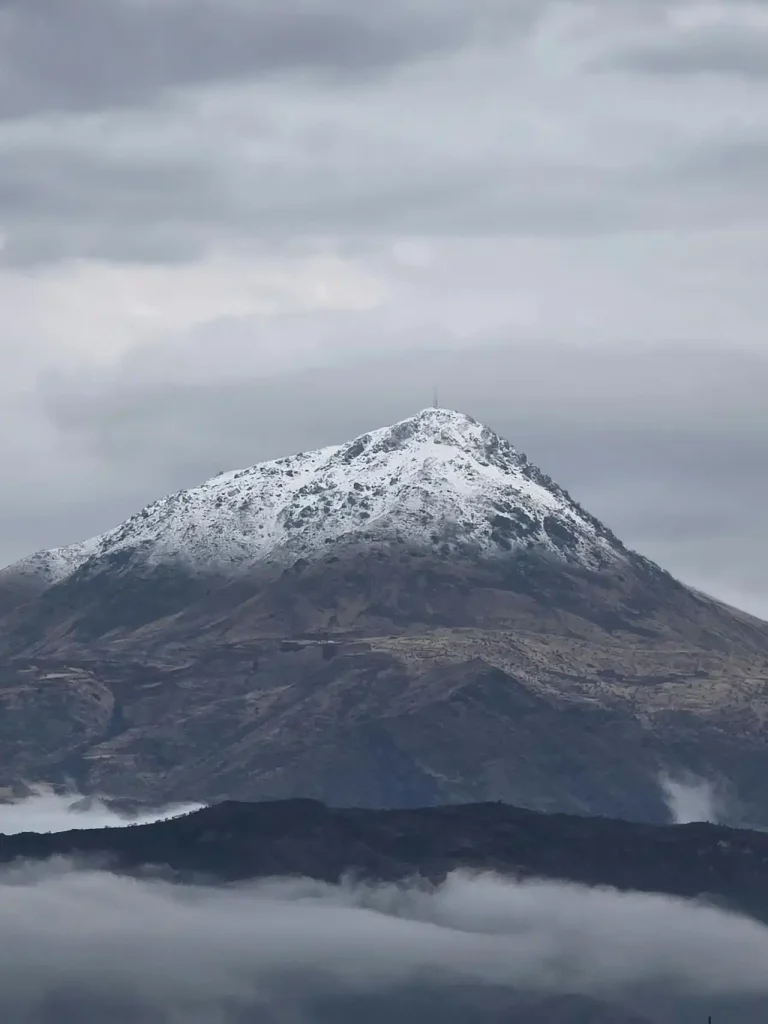
Iraq Top-10 fairytale-places encompasses the most enchanting and whimsical destinations that showcase the country’s profound historical and natural heritage.
These fairytale-like locations blend ancient mysteries, sacred spirituality, and breathtaking natural landscapes that transport visitors to another realm.
From the towering spiralling minaret of the Great Mosque of Samarra to the serene valleys of Lalish, Iraq offers an extraordinary array of hidden gems that have captivated travellers, scholars, and pilgrims for centuries.
These remarkable sites preserve the essence of Mesopotamian civilization while revealing the cultural richness and aesthetic beauty that define this ancient land.
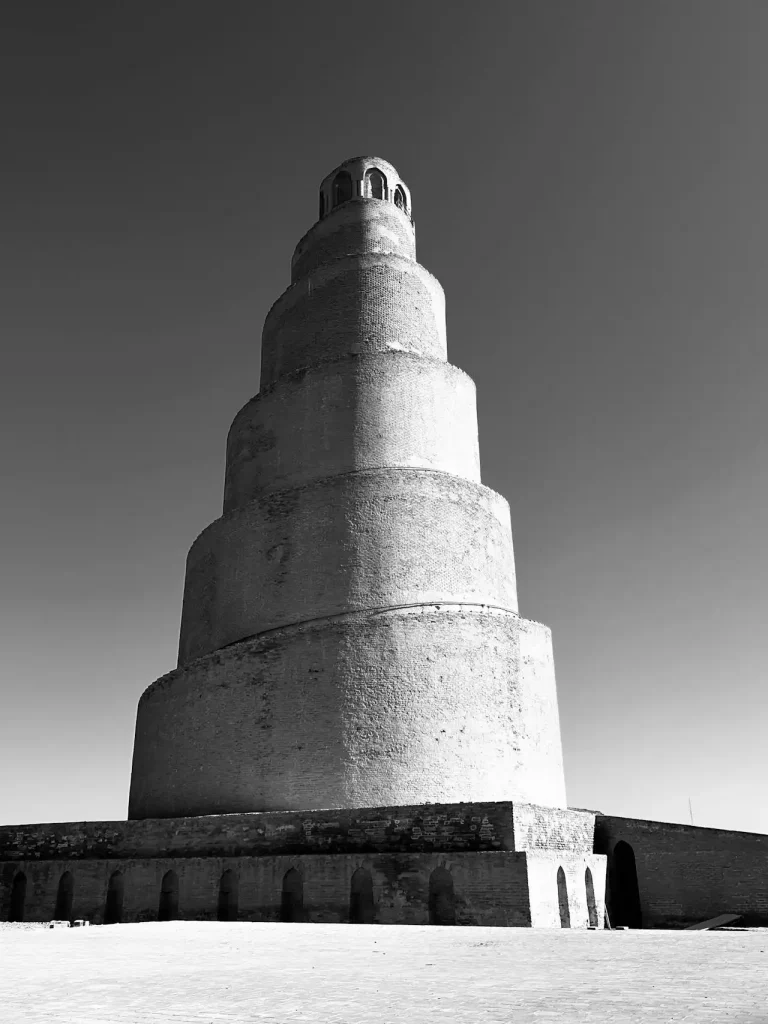
The Great Mosque of Samarra and Malwiya Minaret
Rising majestically from the plains of central Iraq, the Great Mosque of Samarra represents a monumental achievement in Islamic architecture.
Commissioned in 848 CE and completed in 851 CE by the Abbasid Caliph Al-Mutawakkil, this extraordinary structure showcases the architectural brilliance of the ninth century. The mosque once held the title of the world’s largest mosque at the time of construction, measuring an impressive 38,000 square meters.
The most distinctive feature of Samarra is its iconic Malwiya Minaret, a 52-meter spiral tower that encircles the structure like a coiled serpent. This unique cylindrical minaret, meaning “the snail shell” in Arabic, features an external spiral ramp that allowed the muezzin to ascend and deliver the call to prayer across the entire city. The architectural marvel was constructed using baked brick with intricate decorative bands and ornate carvings that reflect the craftsmanship of the era.
The site was officially recognized as a UNESCO World Heritage Site in 2007, cementing its status as one of the most important monuments of Islamic civilization.
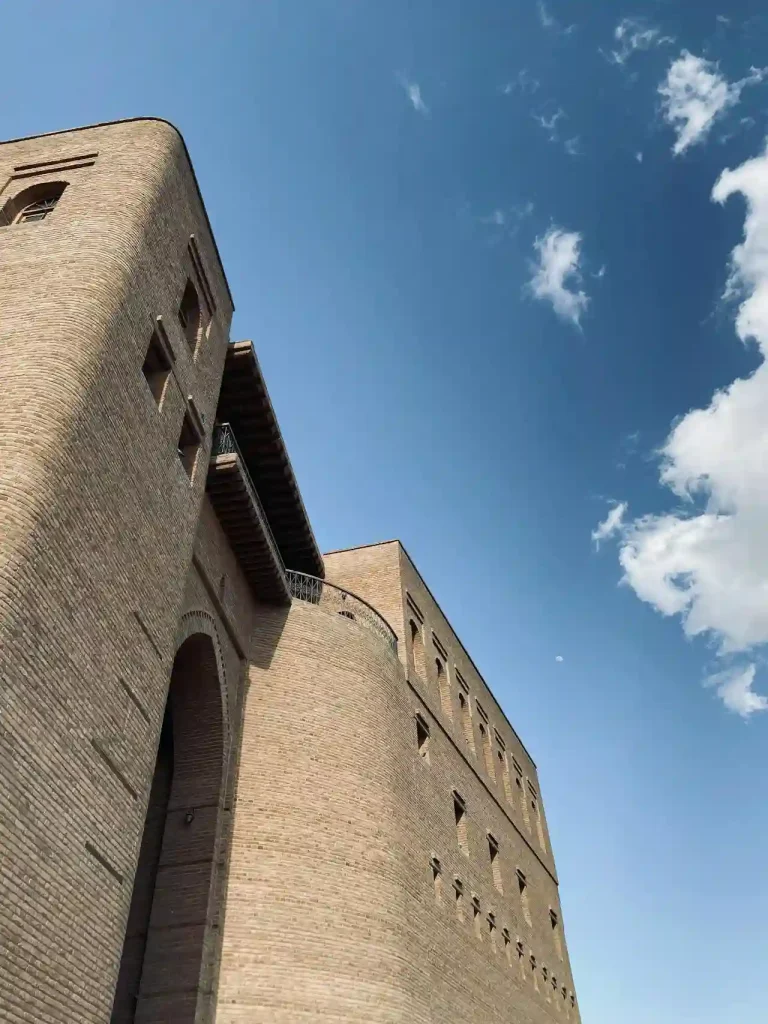
Erbil Citadel: The oldest inhabited settlement
Perched dramatically above the Kurdistan plain, the Citadel of Erbil stands as one of the world’s longest continuously inhabited settlements, with evidence of occupation dating back to the fifth millennium BCE.
This remarkable tell, or artificial mound, rises between 25 and 32 meters from the surrounding landscape, creating a distinctive silhouette that has dominated the city’s skyline for millennia. The oval-shaped citadel stretches across approximately 430 by 340 meters, occupying 102,000 square meters of historical significance.
First appearing in written records around 2300 BCE in the Ebla tablets, Erbil gained particular prominence during the Neo-Assyrian period when it served as an important political and religious center. Throughout subsequent ages – from the Sassanian period through the Abbasid Caliphate – Erbil maintained its importance as a major hub of Christianity and Islamic learning. The citadel’s distinctive fan-line pattern dates to the late Ottoman phase, while the famous tall wall built around the structure during the nineteenth century gives it the appearance of an impenetrable fortress.
In June 2014, UNESCO recognized this architectural marvel as a World Heritage Site, acknowledging its unparalleled historical continuity and cultural value.
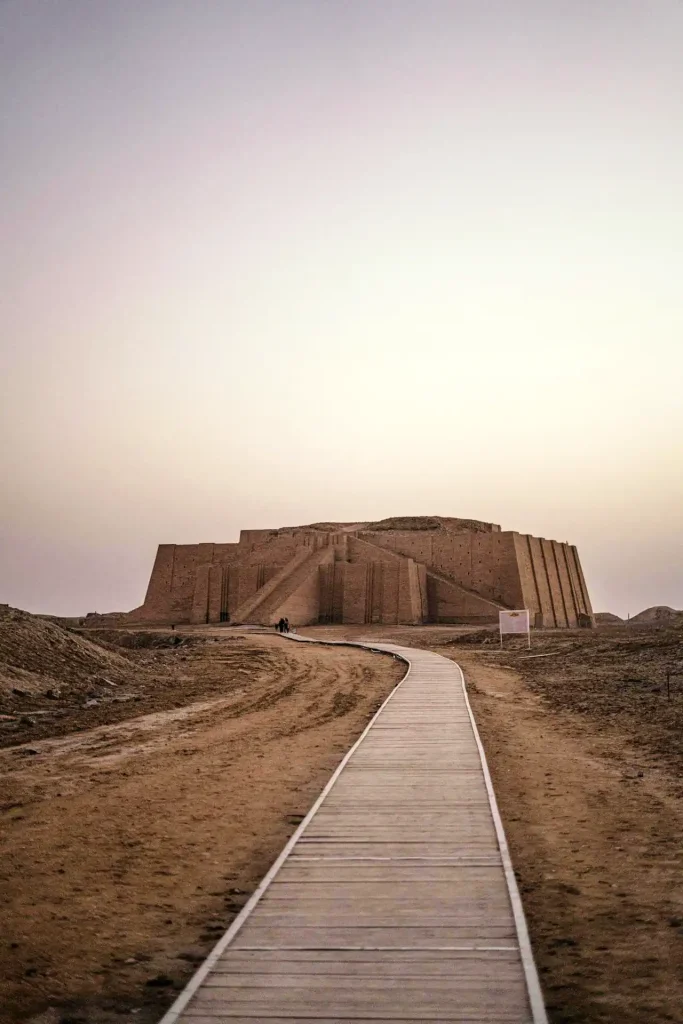
The Ziggurat of Ur – Mesopotamian monument
Located in the southern region near Nasiriyah, the Ziggurat of Ur stands as one of the best-preserved monumental structures from ancient Mesopotamia.
Built during the Early Bronze Age around the twenty-first century BCE by King Ur-Nammu and completed by his son Shulgi, this massive step pyramid rises over 30 meters in height, measuring 64 meters in length and 45 meters in width. The ziggurat was constructed using a solid core of mud bricks with an outer shell of baked bricks, creating a structure designed to endure millennia.
The ziggurat functioned not merely as a religious monument but as a vital administrative center for the city-state of Ur. Dedicated to the moon god Nanna, the patron deity of Ur, this temple complex served as the spiritual and governmental heart of one of Mesopotamia’s greatest civilizations.
Three distinct layers compose the original Sumerian structure, each one smaller than the one beneath it, creating the characteristic stepped appearance. King Ur-Nammu’s monumental construction project transformed Ur into a capital that controlled much of Mesopotamia during his reign, establishing the city as a center of power and cultural achievement.
The site remains largely intact today, offering visitors a tangible connection to the distant past.
Babylon – Legendary ancient city
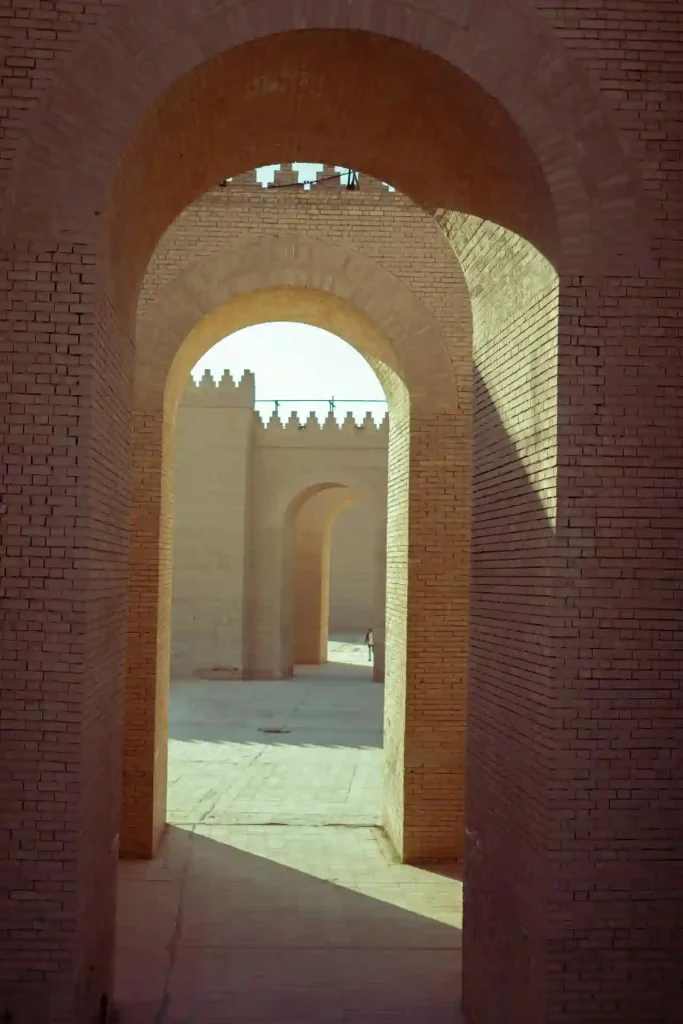
Approximately 50 miles south of Baghdad lies Babylon, one of history’s most legendary ancient cities.
Once the capital of the Neo-Babylonian empire under King Nebuchadnezzar II between 626 and 539 BCE, Babylon stood as the largest metropolis in the world during this era. The sprawling 2,500-acre archaeological site encompasses both the ruins of the ancient city and surrounding villages and agricultural areas, preserving evidence of multiple civilizations that flourished across the site.
Babylon earned its place in world history through numerous accomplishments and the famous Hanging Gardens, one of the Seven Wonders of the Ancient World. King Hammurabi established the world’s first written law code in this city, revolutionizing governance and legal systems. The site reveals distinct archaeological zones, including the Homera mound containing Hellenistic remains and the Babil mound at the northern end, which housed palaces built by Nebuchadnezzar.
Despite modern challenges and historical destruction, Babylon was officially inscribed on the UNESCO World Heritage List on July 5, 2019, recognizing its outstanding universal value as a cradle of human civilization.
Visitors walking among the ruins witness the grandeur of ancient Mesopotamian power and architectural achievement.

The Holy City of Najaf – Spiritual heart
Centered 160 kilometers south of Baghdad, Najaf stands as one of the holiest cities in Shia Islam and a major pilgrimage destination that attracts millions of devotees annually.
The city’s spiritual significance stems from it being the burial place of Imam Ali ibn Abi Talib, the cousin and son-in-law of Prophet Muhammad and the first Shia Imam.
The magnificent Imam Ali Mosque, with its golden dome and intricate architectural details, dominates the cityscape and serves as the focal point of religious devotion.
Founded in 791 CE by the Abbasid Caliph Harun al-Rashid, Najaf evolved into a major center of Shia Islamic scholarship and learning. The Hawza of Najaf, one of the world’s oldest Islamic seminaries established over a thousand years ago, continues to serve as a vital institution for religious education and theological study.
Beyond its religious importance, Najaf houses the Wadi al-Salam cemetery, the largest burial ground in the world, which attracts pilgrims who seek to be interred in this sacred ground. The city’s old bazaars, historic libraries, and traditional markets offer visitors glimpses into centuries-old commercial and cultural traditions that persist within its narrow, winding streets.
Karbala – Sanctuary of sacred shrines
Located in the heart-central Iraq, Karbala represents another pinnacle of Shia Islamic spirituality and cultural heritage.
The city’s primary significance derives from the tragic Battle of Karbala in 680 CE, where Imam Husayn, the grandson of Prophet Muhammad, was martyred. The Imam Husayn Shrine, featuring a distinctive 27-meter golden dome completely covered with gold leaf, stands as one of the holiest sites in Shia Islam, drawing millions of pilgrims annually, especially during the Ashura commemoration.
Adjacent to the Imam Husayn Shrine stands the Al-Abbas Shrine, honoring Abbas ibn Ali, Husayn’s flag-bearer and half-brother. This magnificent shrine, with its ornately decorated internal dome featuring intricate mirror work, represents centuries of architectural evolution and patronage by emperors and sultans of various dynasties.
The two golden domes together create an unforgettable silhouette that defines Karbala’s identity. Modern visitors experience profound spiritual atmosphere while witnessing one of the Islamic world’s most sacred complexes, where the intersection of history, faith, and artistry creates an atmosphere of reverence and renewal. The shrines undergo continuous enhancement and restoration, ensuring their preservation for future generations.
Lalish – The sacred valley of Yazidi faith
Nestled in a serene valley in the mountains near Mosul, Lalish represents the holiest sanctuary for the Yazidi people, an ancient religious minority with unique spiritual practices rooted in pre-Islamic traditions.
Located approximately 60 kilometers north of Mosul at an elevation of 861 meters above sea level, this sacred complex sits amid three encircling mountains – Hizrat to the west, Misat to the south, and Arafat to the north. The location itself carries profound spiritual meaning, believed by Yazidis to represent the womb of the Earth.
The spiritual center of Lalish revolves around the sanctuary and mausoleum of Sheikh Adi ibn Musafir, a twelfth-century religious reformer whose teachings shaped Yazidi theology. Every Yazidi is expected to make at least one pilgrimage to Lalish during their lifetime, with many returning annually for the autumn seven-day Feast of the Assembly celebrated between October 6 and 13.
The sacred complex includes distinctive conical-roofed structures, ancient stone edifices, and two sacred springs – Zamzam and Kaniya Spî (the White Spring) – believed to possess divine properties.
Visitors remove their shoes upon entry, honouring the site’s sanctity, and must avoid wearing blue, considered disrespectful in Yazidi tradition. Nature and architecture combine harmoniously in this unique space where every stone, building, and plant carries spiritual significance.
Ctesiphon – The Persian arch
Standing majestically 35 kilometers southeast of Baghdad, the ruins of Ctesiphon reveal the architectural sophistication of the Persian Sassanid Empire.
The most iconic remnant is the Taq Kasra, or Arch of Ctesiphon, a monumental iwan (vaulted hall) that served as the facade of the imperial palace. Built between the third and sixth centuries CE, this magnificent structure measured 37 meters high, 26 meters across, and 50 meters long, making it the largest free-standing vault constructed until modern times using unreinforced brickwork.
Ctesiphon served as the capital of the Persian Empire from 226 CE until the Arab conquest in 637 CE, and some historical accounts describe it as the largest city in the world during the late sixth and early seventh centuries.
The architectural innovation evident in the Taq Kasra – with bricks laid at eighteen-degree angles from the vertical and quick-drying cement mortar allowing construction without supporting scaffolding—demonstrates the engineering brilliance of the era. After the Arab conquest, the palace briefly served as a mosque before the entire city gradually fell into abandonment.
The arch’s survival through nearly 1,800 years of earthquakes, floods, and human exploitation stands as a testament to Sassanid building techniques. Visiting Ctesiphon provides a poignant encounter with a vanished empire’s grandeur, where the solitary standing arch evokes memories of imperial splendour.
The Mesopotamian Marshes – Ancient wetland ecosystem
Stretching across southern Iraq between the Tigris and Euphrates rivers, the Mesopotamian Marshes encompass one of the world’s most unique wetland ecosystems and a UNESCO World Heritage Site designated in 2016.
Originally covering approximately 20,000 square kilometers, these marshes comprise three main regions: the Central Marshes between the two rivers, the Hammar Marshes south of the Euphrates, and the Hawizeh Marshes east of the Tigris. This aquatic landscape has supported the Ma’dan people (Marsh Arabs) for millennia, who developed a distinctive culture perfectly adapted to the waterways.
The marshes represent a fairytale landscape transformed by traditional boats called mashuuf, reed-constructed houses that rise dramatically from the water, and water buffalo herds that wade through shallow channels. Traditional marshland inhabitants continue ancient practices of harvesting reeds, cultivating rice, and fishing in these waters, maintaining customs unchanged for thousands of years.
The UNESCO recognition celebrates the marshes’ ecological importance and cultural heritage, acknowledging both the extraordinary biodiversity and the remarkable human civilization adapted to these wetlands. Visitors taking traditional boat trips through the marshes experience a prehistoric way of life, where the boundary between water and land dissolves, and nature dominates the landscape with overwhelming beauty. The marshes’ recovery after decades of deliberate draining represents an ongoing triumph of restoration and conservation.
Dukan Lake – Kurdistan’s sparkling gem
In the mountainous regions of Iraqi Kurdistan, Dukan Lake spreads across the landscape as the largest lake in Iraq, forming a stunning artificial reservoir surrounded by dramatic mountain scenery.
Visible even from space in satellite imagery, the lake’s distinctive shape resembles a Christmas tree, creating a natural wonder that captivates photographers and nature enthusiasts. The lake sits approximately 110 kilometers northwest of Sulaymaniyah city, nestled beneath the Sara Mountains, and serves as a vital water source for over 70 villages in the surrounding region.
The crystal-clear blue waters contrast strikingly with the rugged, rocky hills that rise dramatically from its shores, creating panoramic vistas that shift with the changing light throughout the day. The surrounding landscape supports diverse vegetation, including pine forests and wildflower meadows that transform with the seasons. Dukan Lake offers visitors multiple recreational opportunities, from boating and jet skiing to fishing and swimming in designated areas.
Local villages pulse with life along the shoreline, offering traditional Kurdish hospitality, fresh cuisine, and cultural authenticity. The lake’s role as a symbol of resilience in a region recovering from conflict emphasizes its importance as an eco-tourism destination. Spring and autumn present ideal visiting conditions with mild weather and natural beauty at its peak, when wildflowers bloom and mountain breezes refresh the landscape.
Related keywords: ancient Mesopotamia hidden gems, Iraq underrated destinations, fairytale travel locations, off-the-beaten-path Middle East, Mesopotamian archaeological sites, Iraq cultural heritage, sacred pilgrimage destinations, natural wonders Iraq, Sassanid architecture, Yazidi culture and traditions.