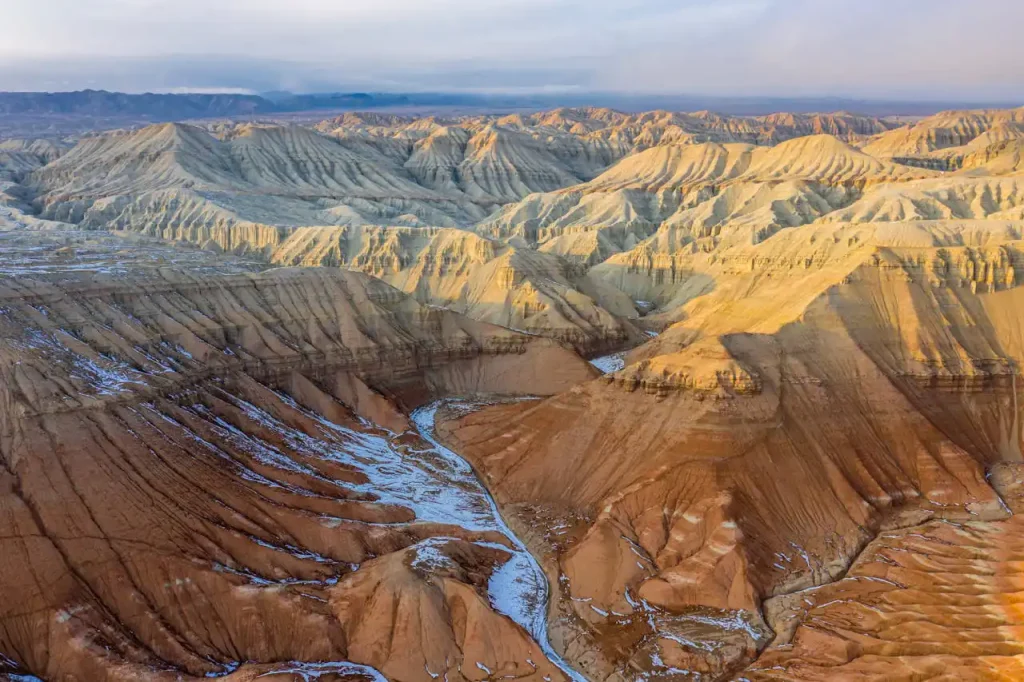
Kazakhstan Top 10 Fairytale Places represents an enchanting realm where ancient traditions merge with dramatic natural formations, creating unforgettable experiences across Central Asia’s most captivating landscapes.
Discover how Kazakhstan Top 10 Fairytale Places reveals a country transcending ordinary tourism, offering hidden sanctuaries nestled between Silk Road heritage and pristine wilderness that attract adventurers and culture enthusiasts worldwide.
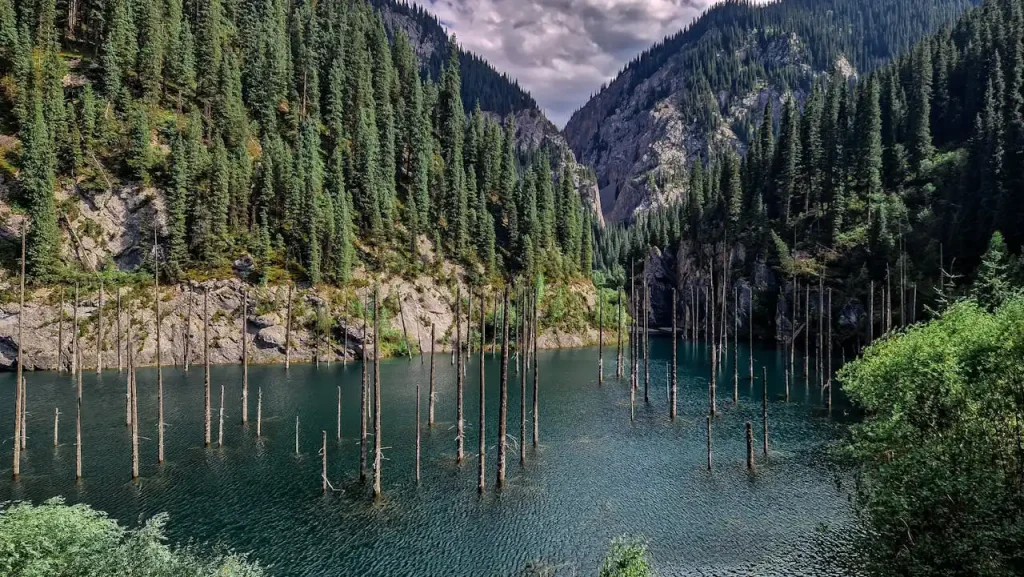
Lake Kaindy – The sunken forest
Imagine standing at a glacier lake where silver tree trunks pierce through turquoise waters like submerged ship masts. Lake Kaindy, located at 2,000 meters elevation in Kolsai Lakes National Park, represents one of the planet’s most extraordinary natural phenomena.
This mystical alpine lake emerged in 1911 following a catastrophic earthquake and landslide that created a natural dam, forever altering the landscape.
The lake’s most captivating feature is the preserved forest of Picea schrenkiana trees that perished during the water’s rise. The frigid alpine waters, rarely exceeding 6°C, have kept these wooden skeletons remarkably intact for over a century.
The bluish-green coloration stems from limestone deposits, creating a photographic dreamscape attracting visitors from across the globe.
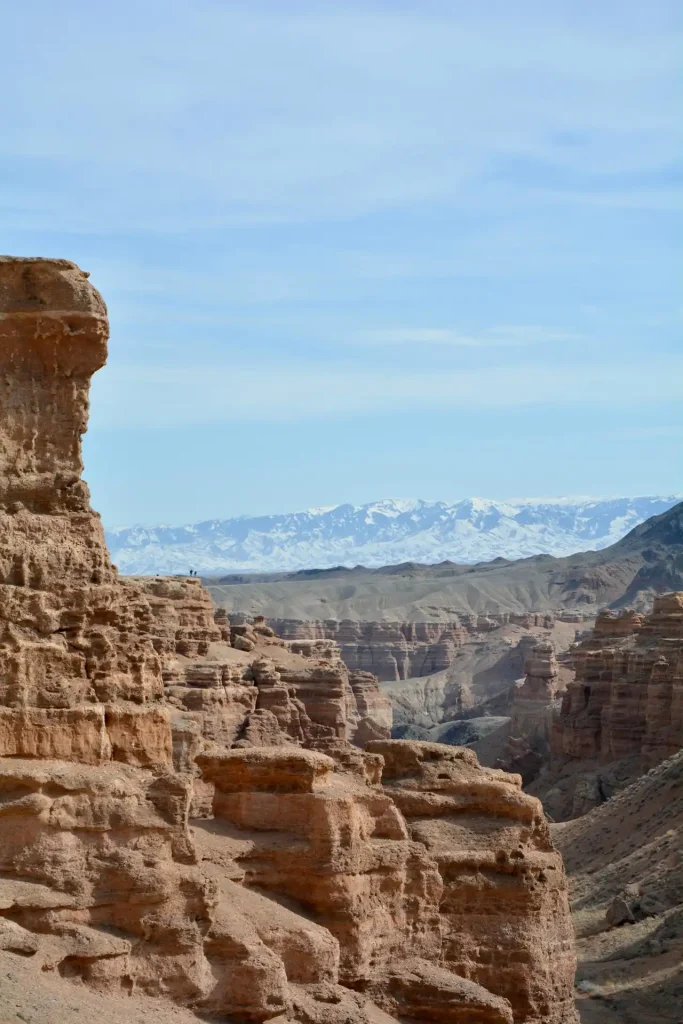
Charyn Canyon – Valley of Castles
Eastern Kazakhstan harbors a geological masterpiece rivaling continental wonders. Charyn Canyon stretches 154 kilometers of dramatic sandstone architecture, with the Valley of Castles representing its most mesmerizing section.
Over twelve million years, the Charyn River carved through sedimentary layers, sculpting towers and columnar formations evoking medieval fortifications frozen in stone.
The canyon’s aesthetic power intensifies during sunrise and sunset when warm hues of crimson, amber, and burnt orange transform the rocky landscape. The Valley of Castles section extends approximately two kilometers, with formations reaching 150 to 300 meters height.
Visitors traverse winding pathways experiencing the canyon’s maze-like grandeur through bands of red, yellow, and black sedimentary rock.
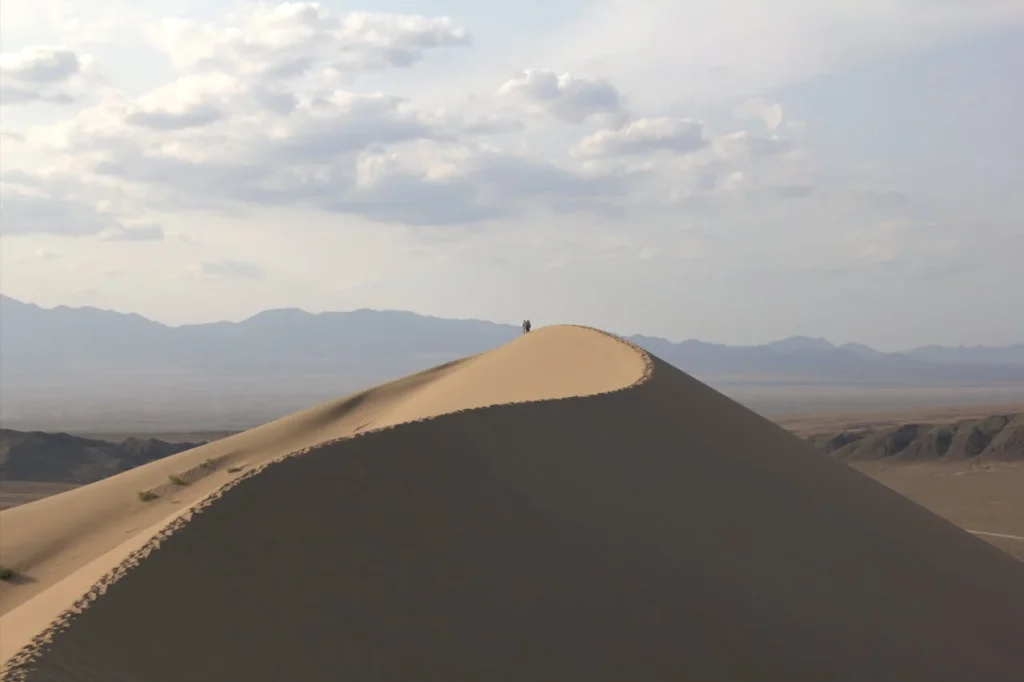
Altyn-Emel National Park – Singing dunes
Spanning 4,600 square kilometers northeast of Almaty, Altyn-Emel National Park encompasses remarkable geological wonders. The Singing Dunes, or Barchan, represent one of fewer than thirty vocal sand formations globally.
This 120-meter-high crescent-shaped dune produces an ethereal humming sound when wind conditions align perfectly, creating haunting resonance emanating from the desert itself.
The Aktau Mountains present layers of naturally occurring pigmentation in white, red, and orange hues. The park shelters 260 animal species and 1,800 plant species, including numerous endemic varieties.
Archaeological treasures include the Bes-Shatyr burial complex, comprising 31 Saka ceremonial mounds where archaeologists have unearthed gold-plated artifacts. This destination harmonizes geology, mythology, ecology, and archaeology into one transcendent sanctuary.

Tamgaly Petroglyphs – Ancient rock art
A UNESCO World Heritage Site since 2004, Tamgaly encompasses approximately 5,000 petroglyphs distributed across 48 archaeological complexes. These ancient rock carvings, predominantly from the Bronze Age roughly 3,000 years before present, reveal the spiritual worldviews of Central Asian nomadic peoples.
The petroglyphs showcase artistic sophistication, featuring naturalistic animals, solar deities with radiating heads, armed warriors, hunting scenes, and mystical anthropomorphic figures.
The central canyon concentrates the densest petroglyph arrangements, suggesting ceremonial significance within ancient societies. Particularly remarkable are compositions featuring “sun-headed” deities positioned above strings of dancing and worshipping figures.
Medieval period carvings, including Turkic runic and Oirat inscriptions, overlay earlier Bronze Age work, providing chronological layering spanning millennia.
Mausoleum of Khoja Ahmed Yasawi
Standing majestically in Turkestan, the Mausoleum of Khoja Ahmed Yasawi represents Kazakhstan’s first UNESCO World Heritage designation in 2003. Commissioned by legendary conqueror Timur in 1389, this magnificent 14th-century structure honors Khoja Ahmed Yasawi, a revered Sufi poet and mystic who lived from 1093 to 1166.
The building, standing 39 meters high with 35 interconnected rooms, showcases unfinished Timurid architectural brilliance.
The mausoleum’s architectural innovation surpassed contemporary structures, with design principles later influencing Samarkand’s grand constructions. Intricate tilework, soaring domes, and ornamental details demonstrate medieval Central Asian craftsmanship at its zenith.
Within the central chamber rests the sacred Taikazan cauldron, a revered artifact for pilgrims. The mausoleum contains remains of 24 khans, 57 batyrs (warriors), and 18 biys (judges), establishing it as Central Asia’s most significant spiritual pantheon.
Aksu-Zhabagly Nature Reserve – Ancient sanctuary
Established in 1926, Aksu-Zhabagly claims distinction as Central Asia’s oldest nature reserve, encompassing pristine wilderness within the Western Tian Shan Mountains.
The reserve protects extraordinary biodiversity, including the elusive snow leopard, Tian-Shan brown bear, Siberian ibex, and Eurasian lynx. Spring transforms this landscape when alpine meadows erupt with wildflower displays, including rare tulip species beneath snow-capped peaks.
The Aksu Canyon presents towering rock walls exceeding 300 meters, carving through pristine forest. Crystalline mountain rivers cascade through deep gorges, while panoramic viewpoints reveal sweeping vistas across undisturbed wilderness.
Over 1,300 plant species flourish here, many endemic to this specific mountain environment. Trekking offers possibilities of glimpsing rare wildlife, though snow leopards remain exceptionally elusive nocturnal hunters.
Sauran Fortress – Medieval oasis city
Approximately 50 kilometers from the modern city bearing its name, the archaeological ruins of Sauran stretch across 50 hectares, preserving memory of one of Kazakhstan’s greatest medieval cities.
First mentioned in written sources around the 10th century, Sauran flourished as a major Silk Road metropolitan center. Remarkably, while nearby Otrar faced complete destruction, Sauran negotiated coexistence with Mongol invaders, subsequently serving as capital of the White Horde.
The fortress complex features impressively preserved walls reaching heights of six meters, encircling an oval settlement extending 800 meters northeast-southwest. Archaeological excavations reveal sophisticated urban planning, including an advanced underground water canal system sustaining this oasis city.
The city shifted location multiple times as the Syr Darya River changed course, presenting lessons about human adaptation to geographical constraints.
Aisha-Bibi Mausoleum – Terracotta masterpiece
Located 18 kilometers southwest of Taraz, the 11th-12th century Aisha-Bibi Mausoleum stands as Central Asia’s sole structure entirely covered in carved terracotta ornamentation.
Legend tells a Karakhanid ruler built it for his fiancée Aisha-Bibi who died from snake bite en route to their wedding.
Over 60 distinct tile patterns create geometric, floral, and calligraphic designs with light-shadow illusions echoing Soghdian traditions, restored using authentic Sauran clay.
Bozhira Canyon – Desert mystery landscape
In southwestern Kazakhstan’s Mangystau Region lies Bozhira Canyon, a geological portal to Earth’s ancient past. Two hundred million years ago, this location lay submerged beneath the Tethys Ocean.
Today, distinctive limestone formations called “fangs”—towering rock remnants rising precipitously from the canyon floor—dominate the landscape. These pale chalk-colored formations glow ethereally under sunset illumination, creating otherworldly panoramas.
The canyon represents one of Kazakhstan’s most dramatic geological laboratories, where chalk layers reveal oceanic history through fossilized remains. Walking through the gorge offers perspectives of evolutionary time, with visible stratification narrating millions of years of tectonic forces.
Adjacent areas feature the mysterious Valley of Balls, where perfectly spherical rock formations dot the desert floor, with origins debated by geologists proposing electrical discharge within tectonic faults.
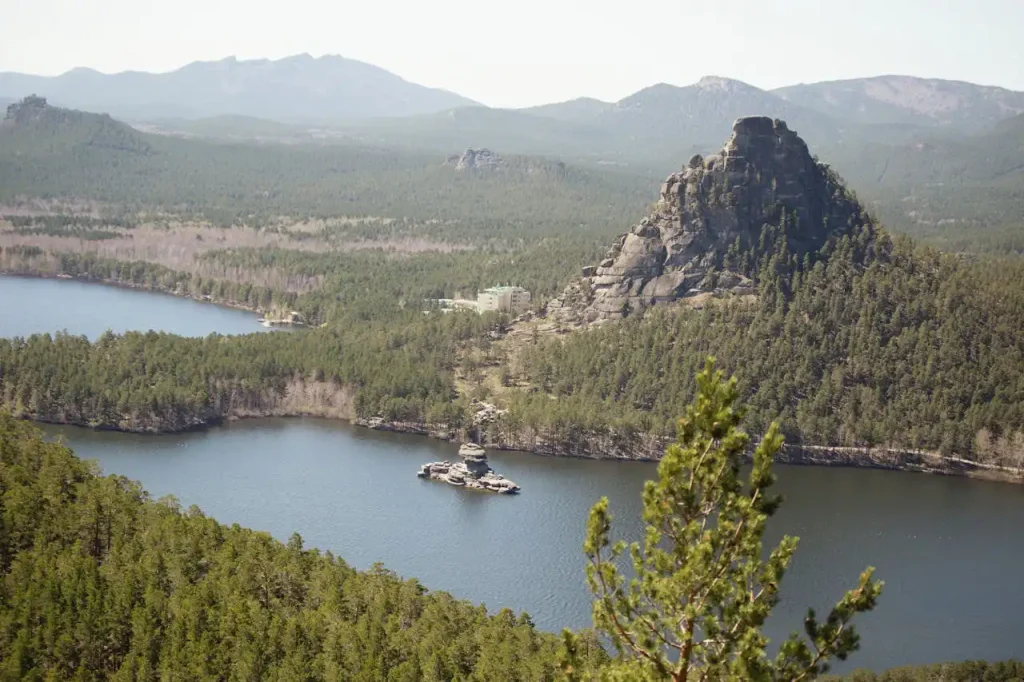
Burabay National Park – Steppe oasis
Located 250 kilometers north of Astana, Burabay National Park represents an extraordinary natural oasis emerging from Kazakhstan’s monotonous steppes.
Known locally as the “Kazakh Switzerland”, this 85,000-hectare protected area surprises visitors transitioning from flat grasslands into undulating terrain dotted with 14 pristine lakes surrounded by dense birch and pine forests.
The contrast between verdant forests and crystalline waters creates magical scenery offering respite from vast open steppes. The park encompasses 757 plant species, including numerous protected varieties, alongside 305 animal species. Notable wildlife includes deer, wild boars, lynxes, wolves, and diverse bird species.
Kenesary Cave, named after the grandson of legendary Khan Ablai, offers historical significance and geological interest. Multiple lakes invite boating, swimming, and fishing, while forest trails wind through aromatic groves. The park’s designation as Kazakhstan’s pearl reflects genuine wonder visitors experience exploring this unexpected paradise.