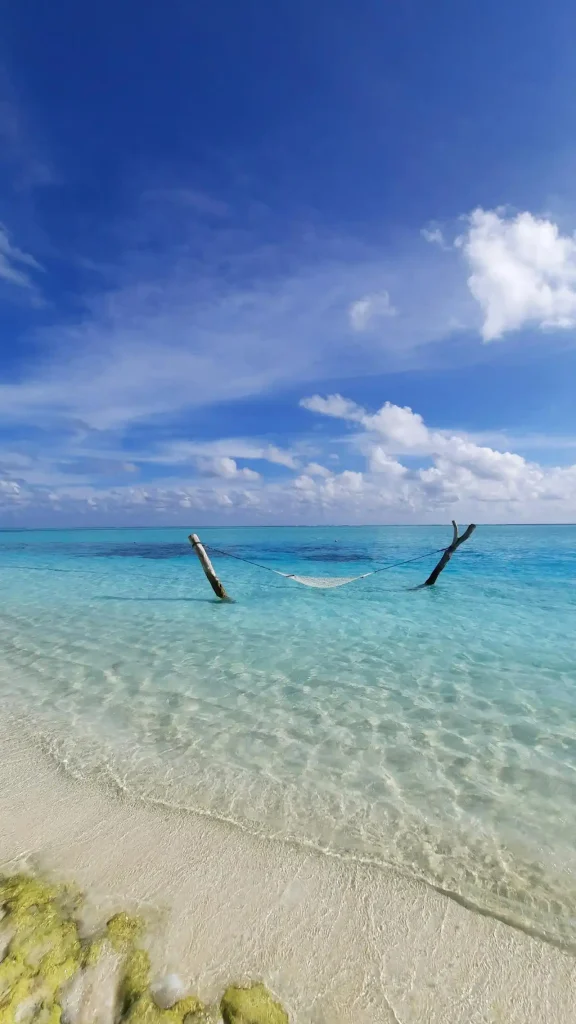
Maldives Top 10 Fairytale Places unveils a world of hidden archipelago treasures and enchanted island communities.
Beyond the postcard resorts of turquoise lagoons, Maldives Top 10 Fairytale Places reveals the true soul of the Indian Ocean beneath crystalline skies.
Authentic villages pulse with centuries-old traditions, freshwater lakes mirror tropical forests, and remote atolls remain untouched by mass tourism, offering travelers a chance to experience magic that few ever discover.

Goidhoo: Fairytale island with freshwater lakes
Tucked away in the Horsburgh Atoll, Goidhoo emerges as one of the most whimsical islands in the entire archipelago.
This spacious local island, home to merely five hundred inhabitants, sprawls across lush tropical vegetation where coconut palms, rubber plants, and towering trees create a verdant landscape unlike anywhere else in the Maldives. The island’s defining feature is its freshwater lake surrounded by mangrove forests – a place where enormous land crabs called Kadoofa Kakuni emerge at dusk, creating an almost mythical atmosphere as travelers witness these creatures ambling through moonlit shores.
The lake’s dark waters reflect hanging vines and palms, evoking the feeling of stepping into an enchanted storybook realm. Goidhoo’s small, locally-run guesthouses allow visitors to escape civilization entirely, while the surrounding reefs teem with rays, dolphins, whale sharks, and sea turtles visible at arm’s length.
The island’s agricultural heritage distinguishes it from other atolls – watermelons, papayas, and fresh vegetables flourish here, providing an unexpected sensory richness rarely found in these island chains.
Fulhadhoo: Paradise beach amid untouched nature
Floating in the southern reaches of the Maldives with fewer than two hundred fifty permanent residents, Fulhadhoo represents perhaps the most pristine and secluded experience available.
The island’s western settlement hugs a landscape of genuine wilderness – unspoiled terrain where crystal-clear lagoons lap against powder-white beaches ranked among the world’s finest.
For visitors accustomed to crowded resort islands, Fulhadhoo’s profound quietude and natural purity create an almost dreamlike quality. The surrounding reefs burst with kaleidoscopic marine life, making even casual snorkeling an extraordinary encounter with the underwater world.
Forest walks reveal native flora thriving in abundance, while sunset colors paint the sky in shades of orange and pink that seem almost unreal.
The island embodies the essence of hidden gem discovery – a place where the whimsy of fairytale beaches feels entirely real.
Thoddoo: The agricultural heart amid paradise
Known throughout the Maldives as the “fruit basket,” Thoddoo rises above its peers through abundant farmland where papayas, watermelons, and bananas flourish in fertile soil—an agricultural miracle in an otherwise seafood-dependent nation.
Located in the North Ari Atoll approximately sixty-seven kilometers from the capital, Thoddoo offers a striking visual contrast to typical island landscapes. Lush fields stretch inland, heavy with ripening fruit, while one of the largest and most beautiful bikini beaches any local island boasts curves along the shoreline.
The scent of ripening tropical fruit perfumes the air, evoking an almost enchanted garden atmosphere. Visitors experience genuine Maldivian culture by staying in locally-owned guesthouses, where hosts serve fresh papaya juice made from fruit picked that very morning and homemade curries featuring vegetables grown in surrounding farms.
This agricultural authenticity, combined with stunning beaches and warm community hospitality, creates a fairytale setting where island rhythms remain undisturbed.
Rasdhoo: Gateway to manta rays and crystal waters
Nestled within the Ari Atoll’s marine wonderland, Rasdhoo represents an adventurer’s paradise disguised as a sleepy local island.
The island’s shallow, crystal-clear waters immediately adjacent to the beach invite kayaking and snorkeling where turtles, manta rays, and nurse sharks appear with startling regularity.
Sunset dolphin trips reveal these graceful creatures gliding through golden-hour waters, while bioluminescent plankton create otherworldly nighttime spectacles when moonlight reflects off their glow.
Rasdhoo’s diverse dive sites, including the legendary Hammerhead Shark Point and the Rasdhoo Channel, attract underwater explorers seeking encounters with the archipelago’s richest marine ecosystems.
The island’s picturesque lagoon waters maintain such extraordinary clarity that even from the shore, countless fish species dart through the blue. Night fishing expeditions followed by beach barbecues under star-filled skies create romantic, fairytale moments that linger long after departure.
Fehendhoo: Turtle haven and mangrove wonder
Just minutes from Fulhadhoo, the small island of Fehendhoo captivates visitors with its turtle spotting opportunities and lush mangrove ecosystems.
This intimate island opens doorways to encounters with gentle sea turtles gliding through turquoise waters, while mangrove kayaking expeditions reveal dense root systems and vibrant birdlife – herons, kingfishers, and countless other species inhabiting these brackish waters.
The island’s compact size encourages unhurried exploration, where forest walks wind through vegetation more abundant than typical Maldivian islands.
Fehendhoo’s quiet charm attracts travelers seeking authentic island life combined with genuine marine biodiversity, far removed from resort environments.
The interplay between mangrove darkness and lagoon brightness creates visual poetry, especially during golden hour when light filters through tangled roots.
Fuvahmulah: The island with mystical freshwater lakes
Positioned in the Gnaviyani Atoll at the archipelago’s southernmost reaches, Fuvahmulah exists as a singular island within its own atoll – a geographical uniqueness reflected in its distinctive spirit and culture.
The island’s most enchanting feature involves two freshwater lakes, Bandaara Kilhi and Dhadimagi Kilhi, lying inland amid lush vegetation that creates an almost rainforest-like atmosphere startling to visitors expecting barren sand.
These mysterious lakes, surrounded by coconut palms and dense greenery, appear almost mythical in their existence, as freshwater bodies exist nowhere else in the archipelago. The island speaks a unique Dhivehi dialect distinct from northern islands, while traditional medicine practices and natural healing arts persist within its community.
Long stretches of unspoiled beaches curve along the perimeter, while the island’s relative isolation from tourism crowds preserves an enchanted, almost hidden-world quality that fairytale seekers deeply crave.
Maafushi: Living culture and authentic island rhythm
As one of the archipelago’s most tourist-friendly local islands, Maafushi paradoxically retains profound authenticity despite its accessibility.
Located in the Kaafu Atoll just offshore from the capital, this island pulses with genuine village life where colorful houses line sandy lanes and the daily rhythms of fishing families remain largely unchanged by tourism’s pressures. Boduberu drumming performances flood the evening air with rhythmic heartbeat sounds rooted in centuries-old traditions.
The island’s vibrant fish market creates a sensory explosion—the energy, colors, and sounds of fishermen hauling fresh catches feel entirely genuine and wonderfully whimsical to visitors seeking immersion in local culture. Food tasting tours reveal flavors of authentic Maldivian cuisine prepared with fresh reef fish and coconut-based curries that nourish both body and spirit.
Maafushi’s combination of cultural accessibility and unspoiled charm makes it an ideal stepping stone for travelers wanting fairytale experiences without demanding extensive isolation.
Dharavandhoo: Gateway to manta dreams
Positioned near the legendary Hanifaru Bay within the UNESCO Biosphere Reserve of Baa Atoll, Dharavandhoo offers convenient access to one of Earth’s most extraordinary natural phenomena.
During manta season, hundreds of these graceful creatures gather in the bay’s nutrient-rich waters to feed, creating an underwater ballet of otherworldly beauty.
Locals have ingeniously embraced modern technology with drone spotting systems that locate manta gatherings while maintaining traditional relationships with the marine environment.
The island maintains traditional charm despite its growing tourism – narrow streets wind past local shops, mosques, and family homes, while the community has structured eco-tourism practices that honor conservation principles.
Walking these pathways at dusk, when light softens and humidity wraps around tropical air, evokes fairytale atmospheres where ancient rhythms persist alongside contemporary awareness of environmental fragility.
Kendhoo: Centuries-old Islamic heritage amid turquoise waters
Located within Baa Atoll’s embrace, Kendhoo whispers tales of medieval Maldivian history through its sixteenth-century mosque constructed entirely from coral stone – among the archipelago’s first structures to embody Islamic faith after the religion’s twelfth-century arrival.
This coral-stone edifice stands as a tangible connection to spiritual transformation that reshaped the entire nation, its weathered surfaces speaking of centuries passing.
The island remained relatively undiscovered by tourism until recently, preserving cultural practices and traditional knowledge that newer destinations have surrendered. A renowned traditional medicine healer practices within the community, specializing in remedies passed through generations. The local fish market pulses with authentic energy, while reef encounters reveal vibrant coral gardens teeming with tropical fish.
Kendhoo represents fairytale discovery of the highest order – where history, spirituality, and pristine nature converge beneath equatorial skies.
Gan: Colonial echoes and Buddhist mysteries
Situated at the archipelago’s southern extremity within Laamu Atoll, Gan stands as the largest and most developed island while paradoxically maintaining profound historical mystique.
British colonial architecture from the mid-twentieth century blends seamlessly with contemporary infrastructure, creating a unique aesthetic found nowhere else in the Maldives.
Most enchantingly, Gan Island harbors Buddhist archaeological remains—ancient stupas and monastery ruins that predate the current Islamic era by centuries, representing a lost spiritual civilization when all Maldives followed Buddhism. The Equatorial Museum preserves fragments of this vanished heritage, while bicycle journeys through verdant landscapes pass mysterious stone mounds hinting at forgotten histories.
Fresh water has been engineered through modern technology, creating lush gardens where coconut palms shelter ancient monuments. Leisurely lagoon cruises reveal dolphins and stellar sunset views, while a coastal road connects Gan with neighboring islands Kadhdhoo and Maandhoo, creating a fairytale archipelago within an archipelago where time seems to flow differently.